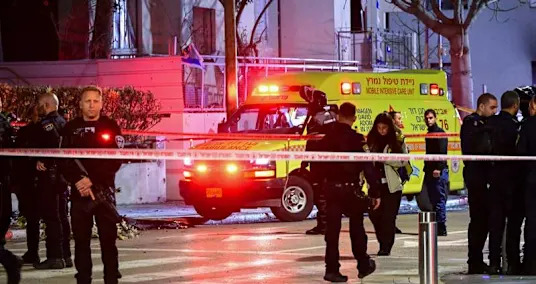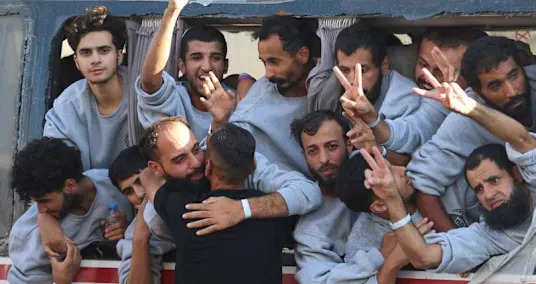
Israeli voters can seemingly contradictorily support the death penalty for terrorists and still doubt that it would deter terrorism.
For years, polling in Israel has shown a broad Jewish-Israeli majority in favor of the death penalty for terrorists. After October 7, the majority did not disappear. In some surveys, it rose. The larger point, though, is continuity. These numbers suggest that the instinct was already there, and that the massacre sharpened it rather than creating it.
That pattern appears across several surveys. In July 2017, the Israel Democracy Institute found that 70% of Jewish Israelis supported the death penalty for terrorists convicted of murdering Israeli civilians on nationalistic grounds, while 66% supported it in cases involving the murder of soldiers.
Reichman University’s PDRD/LIBRES series later found support at 61.5% in September 2023, 67.3% in November 2023, and 64.9% in March 2024 for imposing the death penalty on terrorists convicted of murder. Then, in November 2025, a Mashav “On the Agenda” poll found 81% support among the Jewish public for executing convicted Nukhba terrorists. The exact number changes with timing and wording. The underlying majority is steady.
Still, these surveys are not asking the same question. The 2017 IDI poll dealt with terrorists who murdered Israelis. The Reichman series tracked broader opinion over time. The Mashav poll referred specifically to Nukhba terrorists, the Hamas force identified in Israel with the October 7 massacre.
That wording carries unusual emotional weight. It points to a specific atrocity, not a general legal doctrine. So the 81% figure should be read carefully. It captures the intensity of feeling attached to October 7, not a universal level of support across all possible framings.

The internal gradations are as telling as the overall majority. The Mashav poll found especially high support among national-religious respondents and lower, though still substantial, support among secular respondents. Outside Israel, readers may assume this is a view confined to settlers, religious conservatives, or the ideological far right.
The polling does not support that reading. Support extends well beyond those groups, even if its intensity differs sharply across sectors.
How different sectors of Israeli society view death penalty
That sectoral difference reflects deeper features of Israeli society. “National-religious” in Israel does not map neatly onto “religious conservative” in the US. It usually refers to a camp that combines Orthodox observance, Zionist commitment, military service, and a more hawkish reading of sovereignty and security.
Secular Israelis often share some of the same security instincts while speaking in a different idiom, one shaped more by state institutions and civic norms than by religious language. Haredim (ultra-Orthodox) are different again, with politics often centered on rabbinic authority, education, and military exemptions. These groups sometimes vote together, sometimes not. Israeli polling often reflects that layered structure.
This is one reason Israeli public opinion can look contradictory from abroad. A voter can support the death penalty for terrorists and still doubt that it would deter terrorism. That split appears clearly in the INSS survey from December 2025, which found the public divided on deterrence: 50% said such a law would not deter terrorists, while 46% said it would. Among coalition voters, belief in deterrence was much firmer.
Among opposition voters, skepticism was stronger. Support for the law, in other words, does not automatically mean confidence in its practical effect. It can also reflect anger, a desire for justice, fear of future prisoner swaps, or a demand for finality.
That distinction is familiar in Israel. For decades, Israelis have lived with terrorism as a recurring fact of life, not as a one-time national shock. Suicide bombings, shootings, stabbings, rocket fire, and hostage deals have shaped public instinct. Many Israelis have learned to distrust clean theories of deterrence. They may favor a harsh punishment while remaining doubtful that it changes the logic of militant groups.
Another point that requires care is the distinction between “Israeli” and “Jewish Israeli.” Some of the strongest numbers in this debate refer specifically to Jewish respondents, not the full Israeli public. That is not a minor technical note.
Arab citizens of Israel are part of the electorate and public life, but they do not approach Zionism, military power, and October 7 from the same historical and emotional starting point as most Jewish citizens. When international readers see a headline about “Israeli opinion,” they can easily miss that the underlying data may describe Jewish opinion only. On this issue, that difference can materially change the picture.
The Knesset approved the law on Monday, after months of debate. That legislative step does not prove consensus, but it does suggest that many lawmakers believed the issue carried broad legitimacy within the Jewish electorate, especially after October 7.
Readers outside of Israel should also be careful not to map Israeli politics too neatly onto American categories. In the US, support for capital punishment is often read through arguments about crime and punishment.
In Israel, this debate sits inside a different frame, one shaped by terrorism, war, hostage-taking, and the belief, widely held in the Jewish public, that a life sentence may not always be final in a region where prisoners have repeatedly been released in exchanges.
The easiest mistake is to read these polls as proof that Israel has moved in one simple direction. The numbers tell a more layered story. They show a stable Jewish-Israeli majority that predates October 7, a sharper edge after the massacre, and clear differences across sectors and political camps.
They also show that support for punishment and belief in deterrence are separate things. That distinction helps explain the country more accurately than any headline number alone.
LATEST POSTS
- 1
 Shredded cheese recall: Multiple brands sold at Aldi, Target and Walmart affected over potential metal fragment contamination
 - 2Grammy nominations 2026: Full list of nominees in every major category, including Album of the Year and Best New Artist
- 36 Exemplary Mexican Dishes
- 4How do my eyes adjust to the dark and how long does it take?
- 5Solar storms have influenced our history – an environmental historian explains how they could also threaten our future


- Releasing Learning Experiences: A Survey of the \Learning Made Fun\ Instructive Application
- Human evolution’s biggest mystery has started to unravel. How 2025 tipped the scales
- 'It's doing badly': Fears grow for whale stuck off Germany's coast
- One killed, several injured in Iran missile barrage on southern, central Israel
- I binged all 24 Hallmark Christmas movies in less than 30 days. I emerged a changed man.
- The most effective method to Plan an Incineration Administration: A Bit by bit Guide.
- Step by step instructions to Choose the Right Internet based Degree Program for Your Future
- A Manual for Nations to Head out To
- 3 moms, 3 countries, 1 very familiar problem: Why child care costs still don't add up for families