The secret weapon in the electric revolution is batteries. EVs can’t work without them, and they are the solution to the intermittent nature of many renewable energy sources too. But this is a market dominated by China, which cornered over 80% of global battery production in 2025. In this era of supply chains returning to greater localization due to political and economic instability, innovation will be key. The recent $73 million acquisition of Wildcat Discovery Technologies by Holyvolt could provide a solution. I talked to CEOs of both companies to find out how their rapid battery development platform might redress the balance.
What Wildcat Brings To Holyvolt
Holyvolt CEO Mathias Ingvarsson has an unlikely background for a battery tech entrepreneur. He was a Vice President in the foam mattress business with Tempur-Pedic. He then moved onto building heating into ski goggles and boots using special printing processes. However, batteries are about novel material combinations too. As Ingvarsson pivoted into battery chemistry, focusing on screen-printed solid-state cells, he enlisted the services of Wildcat Discovery Technology.
“Hands down the best in the world for battery chemistry is Wildcat,” says Ingvarsson. “We needed a water-based process, which would take up to three years to develop, and Wildcat did that in three months.” This synergy led to the acquisition. The name “Wildcat” comes from a slang term for oil prospecting, where lots of holes were drilled to find the richest reserves, called wildcatting. Taking inspiration from this approach, the key technology Wildcat brings to the table is high throughput R&D.

Holyvolt screen prints material to create its solid-state batteries.
Holyvolt“We also call this combinatorial chemistry,” adds Mark Gresser, CEO, Wildcat Discovery Technologies. “Our founder, Peter Schultz, comes out of the drug discovery business. Peter thought that high throughput, while terrific for drug discovery, is underutilized. It should be used in lots of different industries.” Wildcat was founded in 2007 with the mission of expanding the technique to other industries. Battery materials were early candidates. “This is automated experimentation. Our scientists can do hundreds or even thousands of experiments simultaneously, all with different material sets.”
The upshot is much faster results than with conventional research. “When you do conventional research, you build one battery at a time,” says Gresser. “At Wildcat, we build thousands. Imagine the time savings in building 1,000 batteries all with slightly different chemistries versus building one battery 1,000 different ways. This parallel approach to research has been proven over and again in the drug discovery world. We built this platform to do the same thing for battery materials - anodes, cathodes, electrolytes, and all parts of the battery.”
How High Throughput Benefits Holyvolt
“There are some differences between drugs and batteries,” says Gresser. “Drug discovery has taken high throughput to an incredible level.” Testing potential therapeutics could involve exposing a disease to a million different compounds in just a day. This can accelerate drug discovery exponentially. “In batteries, it’s a little different because batteries are complex things.” Batteries have anode and cathode powder materials, electrolytes, the way a slurry is coated on a current collector, how it’s laminated and punched. Then testing involves cycling the battery to see how well it works.
“High throughput is all about ruling things out quickly,” says Gresser. “We'll build a thousand batteries and nine hundred and eighty of them don't work very well, but 20 of them work pretty well and maybe five of them are great.” This learning is then fed into another thousand experiments. This process is then repeated to finely hone the chemistry to an optimum design.

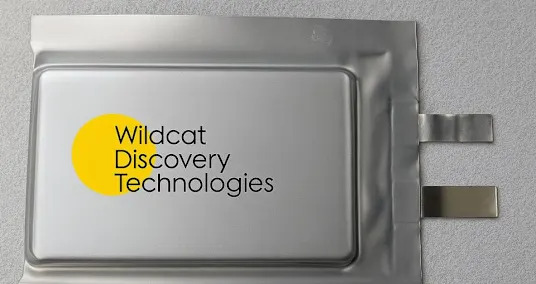
Wildcat Discovery Technologies is a leading proponent of high throughput research and development.
WildcatThe data produced by high throughput testing can also feed AI. This is essential for batteries, which have so many variations of chemistry, format and design. “The amount of data available to train AI models is a big challenge right now in our industry,” says Gresser. “At Wildcat, though, it is not, because we’ve been doing this for 18 years. We have completed 600,000 experiments at least. We have all that data, and it's all very standardized. Not only do we have data about what works, but we also have a huge amount of data about what doesn't work.” These unsuccessful scenarios provide AI models that are more complete than AI that is just trained on what succeeded. “You can do those discoveries for our projects for the battery industry about 10 to 15 times faster, which is a huge cost saving. When we train the AI models going forward, it magnifies that even further. It could be a hundred times faster.”
Some Wildcat clients have been using this rapid material experimentation to explore the best materials to use in different regions, which will help localize supply chains – something Europe and the US direly need in the battery business. However, Wildcat doesn’t test every possible material combination. “If we tried to do that, it would blow up into making 40,000 different batteries,” says Gresser. “Our scientists very intelligently take slices of these. We can get some indication by doing 3-500 instead of 20,000 tests. That’s where AI helps as well, because we can feed all that battery data over all these years into our AI models. Then our scientists pick the right experiment design and do another 300 tests. It's more efficient to do a smaller number, learn, and then repeat fast.”
How Holyvolt Will Use Wildcat DRX To Build Sustainable Batteries
The key initial technology Holyvolt has gained from the acquisition is Wildcat’s DRX, with implications beyond automotive. “Lots of batteries are needed, not only for vehicles, although it’s a huge market, but also for AI datacenters and the electricity grid,” says Ingvarsson. “We need to do that in a much more sustainable way.” The combination of Holyvolt’s tech with DRX has major eco implications. “We reduce the amount of energy needed during production by two thirds.”

Holyvolt prints its battery paste onto a flat surface.
HolyvoltDRX is a new cathode technology. “The DR stands for disordered rock salt,” says Gresser. “That’s the crystal structure of the material. There's no nickel or cobalt in the material at all, yet it has very high energy, and it's also very safe. It has the potential to be very disruptive from CO2 and sustainability standpoints. Nickel processing is one of the key contributors to CO2 in a battery, while cobalt is politically unsavory because of where and how it's mined. We solve both those problems by using a cobalt- and nickel-free chemistry.” Holyvolt’s screen print process doesn’t use solvents like typical slot-die coating. This is combined with Wildcat DRX’s lack of nickel or cobalt to make a very sustainable battery.
“We’ve been going after the automotive industry primarily, and the automotive specification for batteries is one of the toughest,” says Gresser. “That means at least a thousand life cycles. It also means very high levels of energy. But this could be a family of materials that competes in different applications. Entry-level EVs are often using LFP now as the main cathode of choice, led by companies like BYD and Geely in China. But we don’t have a localized supply chain with LFP. Holyvolt and Wildcat have a product that could cycle like LFP, have good safety like LFP, but be very cheap and deliver still more energy than LFP. Even though LFP is being adopted widely, the industry is still desperate for a little more energy out of that product. DRX could be that answer.”

The Holyvolt battery material is fashioned into foil pouches.
HolyvoltHowever, we won’t be seeing batteries with DRX for a little while yet, although this depends on the industry. “We’re trying to get DRX to the pilot scale with demonstration cells for a variety of different applications,” says Gresser. “We've got full multilayer pouch cells now that have completed over 600 cycles. We're hitting energy densities that are about 25% higher than the very best high nickel products in the market. With continued effort, we'll potentially be ready in about two years for automotive. If we scale back that density and still have superior energy to other products in the market, like LMR, LFP, we're closer. We're already in discussions now with military and consumer companies about materials that could be ready for commercialization within a year or so. Very short term, there are applications like for drones where you might get by with 10 cycles. We're already at 600 cycles, so we already have a product that's ready to go.”
The combination of Holyvolt and Wildcat promises batteries that compete well in the market but also do so using local European and American material supply chains. “China is winning the battle for battery technology at present, but the West has ways that they can counter that, and one of those is by bringing better and new technologies forward,” concludes Gresser. BMW’s Board Member Ilka Horstmeier sees solid state batteries as a key technology for Europe, but MG will already be selling cars semi-solid-state batteries in Europe in 2026. In China, novel chemistries like sodium ion are also entering production. “Wildcat has a technological platform that allows us to compete on equal footing. When you have an accelerator for R&D like Wildcat, you don't need to have 2,000 resources. By utilizing the high throughput platform that we've created, the West can compete. Now we just need to get those products developed and into the marketplace.”
This article was originally published on Forbes.com
LATEST POSTS
- 1
 The most effective method to Apply Antiquated Ways of thinking in Current Brain science Practices
 - 2Going with Children: Tips for Tranquil Family Get-aways
- 3The Fate of Gaming: 5 Energizing Advancements Not too far off
- 4People Are Sharing The One Picture They Can't See Without Laughing, And It's The Comedy Spiral You Need Today
- 5Expert advice for new stargazers: How to begin your amateur astronomy journey


- 13 must-see moon events in 2026: Eclipses, supermoons, conjunctions and more
- NASA Artemis II tracker: Where is the Orion now and when will it reach the moon?
- Instructions to Adjust Work, Life, and Seeking after a Web based Advertising Degree
- Solid Living Tips: Experiences from a Wellness Fan
- How to watch ‘The Traitors’ U.K. Season 4 premiere today from the U.S.
- Surveys of Music Collections by Film Stars
- What we know about Renee Nicole Good, the woman who was killed by an ICE officer in Minneapolis
- Tremendous Spelunking: Cool Caverns All over the Planet
- Fiber is something most people could use more of. But experts advise caution with 'fibermaxxing'